
Prong collars have long been a controversial tool in the dog training world. I used them in the past and saw quick results, but over time, I’ve shifted my perspective.
Today, I believe there are more effective, compassionate ways to train a dog that don’t rely on pain or fear. This post explores the pros and cons, why I no longer recommend prong collars, and what I suggest instead.
I used to think walks were non-negotiable. Rain or shine, my dogs had to be walked daily. And if they pulled, we used what we thought worked, including prong collars.

Years ago, when we adopted Bear, he was a 95lb powerhouse with zero leash manners. I remember the stress of trying to walk him with my daughter on her bike and thinking, “How will we ever make this work?”
The prong collar seemed like the answer. It helped me gain quick control, and at the time, I believed it was the most humane option available.
But the more I learned, the more my thinking changed.
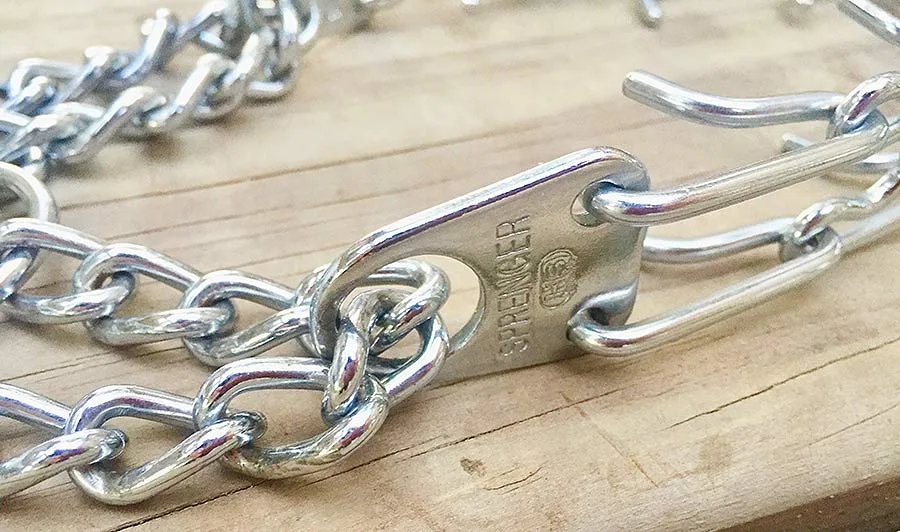
Are Prong Collars Cruel?
This is one of the most frequently asked questions, and the answer isn’t straightforward. Prong collars aren’t inherently cruel… when used properly, they’re designed to apply even pressure around the dog’s neck rather than causing trachea damage like flat collars can. But here’s the catch:
Most people don’t use them properly.
And even when they do, prong collars rely on discomfort to stop unwanted behavior. That’s just not how I want to communicate with my dogs anymore.

Why I Stopped Recommending Prong Collars
Over the years, I’ve fostered dozens of dogs and worked through a wide range of behavioral issues — reactivity, fear, leash pulling, and more. And yes, I used prong collars with some of them in the beginning. I don’t regret those moments; they were part of my learning journey.
However, I’ve also seen how much more powerful it is to build a relationship based on trust, choice, and clear communication, rather than pressure or pain. It might take longer, and it’s not always easy, but the results last longer and feel better for everyone involved.
Instead of reaching for a prong collar these days, I do one of two things:
- I don’t go on a walk right away. I start by sitting in the yard, working on calmness, connection, and attention.
- I use reward-based training and tools like front-clip harnesses or long lines, depending on the dog’s needs.
Walks aren’t the only way to exercise a dog. Mental stimulation, sniff time in the backyard, enrichment games, and play can meet a dog’s needs in a more relaxed, confidence-building way.

Pros and Cons of Prong Collars
Although I no longer recommend them, I think it’s essential to provide a comprehensive picture, especially for those who are desperate for help.
The “Good” (why people use them):
- They can stop pulling quickly
- They’re often used by balanced trainers
- They can be a last resort for strong dogs when other methods haven’t worked
The “Bad and Ugly”:
- They rely on pain or discomfort to stop behavior
- Misuse is common, which can lead to physical and emotional damage
- They don’t teach the dog what to do instead
- They can erode trust between you and your dog