
If your rescue dog startles at everything, freezes on walks, hides from visitors, or seems on edge all day, you’re not alone. A lot of rescue dogs come home with nervous systems that are already running high. New sounds, new smells, new routines, and new people can feel like too much.
The good news: you can help. And you don’t need to tackle every fear at once. Here is your TL;DR version:
- Start with safety and predictable routines.
- Reduce scary situations while your dog settles in.
- Build confidence with tiny daily wins (games work great).
- Rule out pain or health issues if fear feels intense or sudden.
- Get professional help if fear is escalating or safety is a concern.

Step 1: Time
Some dogs settle quickly. Others need weeks or months before you see their personality come out. What helps most:
- Keep the first weeks quiet and low-key
- Limit visitors and big outings
- Stick to simple routines (meals, potty breaks, rest)
- Give your dog a safe spot they can retreat to
If your dog hides, that can be a coping strategy. Let that safe space stay safe.
📖 READ the 3-3-3 Rule for Rescue Dogs
Step 2: Health
If fear seems extreme, shows up suddenly, or your dog is reacting strongly to touch, movement, stairs, or being approached, it’s worth ruling out discomfort. Things to check with your vet:
- joints, back, neck
- ears and teeth
- vision or hearing changes
- digestion issues (nausea can change behavior fast)
You don’t need to assume something is wrong. This is just a smart box to check early.

Step 3: Safety
This part is huge. Your job is to protect your dog from situations that overwhelm them while you build confidence.
Home basics:
- Predictable routine
- Calm voice and calm movement
- A quiet resting space
- Baby gates or barriers if needed (especially with visitors)
People rules:
- Ask guests to ignore your dog at first
- No reaching, leaning, hugging, or hovering
- Let your dog choose the distance
- Keep greetings short and low-key
A simple script helps: He’s shy. Please ignore him and let him come to you.
Step 4: Signals
Fear shows up in a few common ways. Here are some common signs:
- freezing or refusing to move
- hiding or staying behind you
- trembling, panting, drooling
- barking and lunging (often distance-increasing behavior)
- refusing treats outside
- scanning the environment constantly
When you notice these signals, that’s your cue to create more distance, make things easier, and reset.
Step 5: Small wins
Confidence comes from success. The fastest way to create success is with short, simple games that your dog can win every day. A win looks like when your dog:
- sniffs something new
- takes a treat in a new spot
- ecovers faster after a startle
- chooses to step closer, then steps away calmly
- relaxes in the same room instead of hiding
This is exactly why I created my FREE 5 Days of Fun With Your Dog Challenge. It gives you five short games you can start immediately, even with a timid dog.
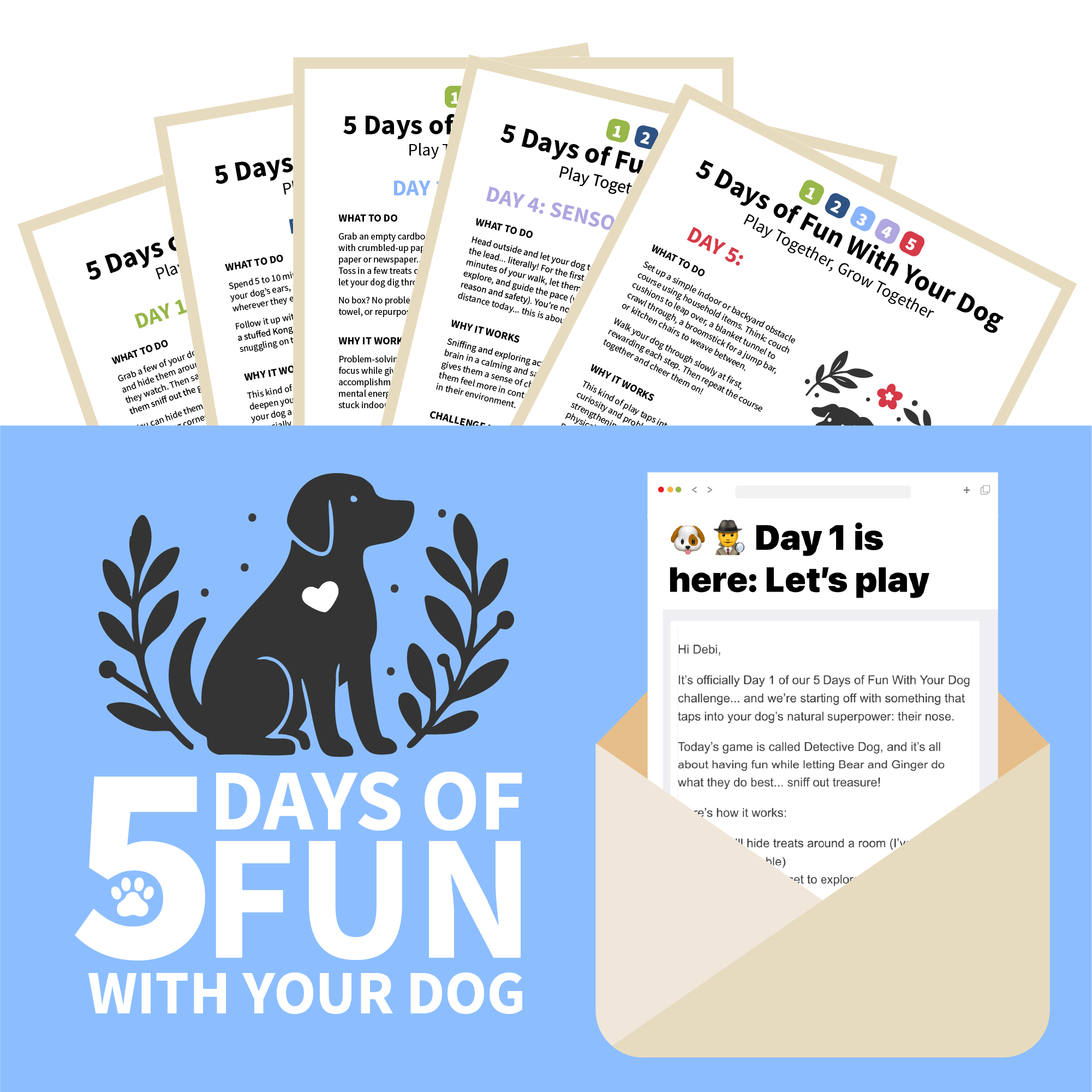
Sign up for the FREE 5 Days of Fun With Your Dog Challenge
Step 6: Simple plan
Don’t try to fix everything this week. Pick one small goal. Here is an example:
- Choose one trigger to work around (for now)
- Create distance from that trigger whenever possible
- Add 1 to 2 confidence games daily (1 to 5 minutes)
- Reward calm choices (sniffing, looking, soft body, curiosity)
- Track progress once a week
Progress is usually quiet at first. Look for recovery time to improve and for curiosity to show up.
Milo’s Story
A Rescue Dogs 101 community member emailed me about her newly adopted rescue dog, Milo. Milo was scared of everything: the vacuum, the dishwasher, door sounds, passing cars, and even the leash. On walks, he’d freeze after a few minutes and refuse to move.
She decided to stop pushing long walks and switched to tiny outings. They’d step outside, scatter a few treats in the grass, and go right back in. Inside the house, she added two short games a day: a simple find it treat scatter and a quick hand target game.
After about two weeks, Milo started recovering faster when he heard a noise. After a month, he could walk farther before freezing. The biggest change wasn’t that he stopped being cautious. It was then that he started bouncing back faster and looking to his person for help.
That’s the goal: more calm, more recovery, more trust.
Adopting a Fearful Dog
Fearful rescue dogs can do well in the right home. It helps if you’re realistic about what your household can handle right now. A good match usually looks like:
- a quieter home
- predictable routines
- fewer visitors
- willingness to go slow
- patience for little progress
When Pro Help is Needed
If your dog is snapping, trying to bite, panicking daily with little recovery, or their fear is getting worse week to week, get help sooner rather than later. A qualified positive reinforcement trainer can make the plan clearer and safer for both of you.
Get help if you see any of the following:
- attempts to bite or serious snapping
- constant panic with little recovery
- fear inside the home all day
- behavior getting worse week to week
- you feel unsafe or overwhelmed
📖 READ: How to Find the Right Dog Trainer
Next step
If you want a simple framework for building trust with an anxious rescue dog, watch this video:
Or if you prefer to read, click here: S.P.A.C.E. Trust Ladder: How to Build Real Trust with an Anxious Rescue Dog.
And if you want to start with easy wins today, join the free challenge:

How long does it take for a fearful rescue dog to feel safe?
It depends on your dog’s background, personality, and how calm and predictable their daily life is. Some dogs show improvement in a few weeks, while others take months. Watch for small signs like faster recovery after a startle, taking treats in new places, and choosing to stay closer to you.
Should I keep walking my dog if they freeze on walks?
Yes, but adjust what “walk” means. If your dog freezes, shorten the outing and choose quieter routes or times. Some dogs do better with tiny outings close to home while confidence builds.
Can I comfort my scared dog, or will that make it worse?
Comforting is fine if it helps your dog settle. Keep your energy calm and steady. Sit with them, speak softly, and give them space if they prefer distance. The goal is to help them feel safe, not to hype them up.
Why won’t my rescue dog take treats outside?
Many fearful dogs can’t eat when they’re overwhelmed. It’s a stress response. Create more distance from triggers, keep outings shorter, and practice confidence games at home first so your dog builds comfort and appetite in easier environments.

Help. I rescued a 5 yr old maltipoo from a rescue which was turned over to them from an Amish puppy mill she is afraid of everything and people including me. She is doing better with that she will come get her food and run back to living room until she is done back and forth .what can I do to help her come a stay. It’s just her and I the house is quit should I make noise or what.
It’s going to take time and patience. It helps to allow the dog to come to you. Try sitting on the floor and just being quiet, don’t force any interaction but you can try and toss some treats at a distance the dgo feels safe.